
The Art of the Hunt: Tips for Photographing Bird Dogs in the Field | Bird Dog Photography
There’s a certain stillness before a flush; that split second where your bird dog locks up, the world goes quiet, and you forget to breathe.
That’s the moment every upland hunter knows. And the moment every photographer chases.
Photographing bird dogs in the field isn’t about luck or fancy gear. It’s about instinct, timing, and respect for the hunt itself. Whether you’re a hunter wanting to document your dog’s best days or a photographer stepping into the uplands for the first time, these five field-tested tips will help you capture the story behind every hunt.
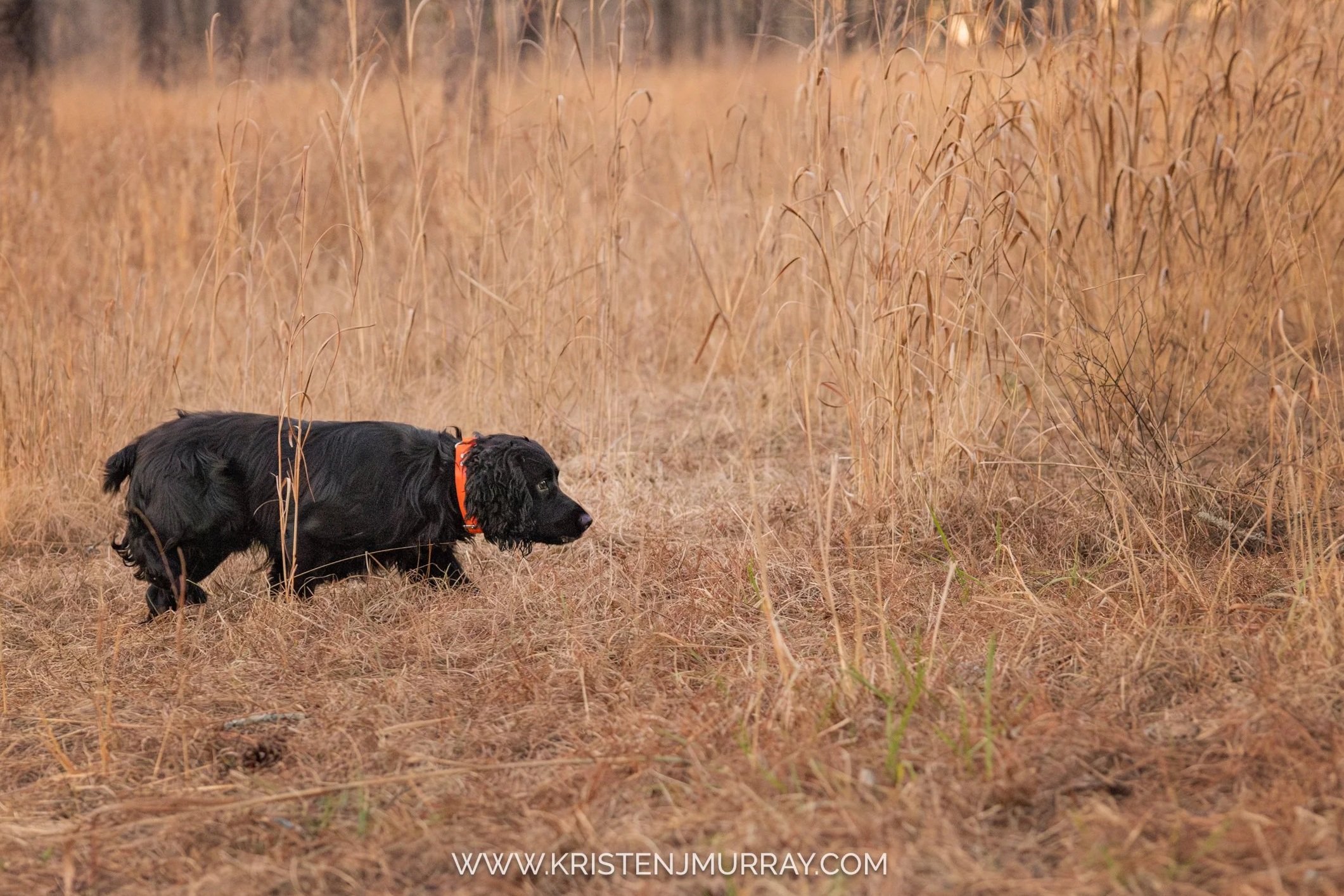
Working English Cocker Spaniel just before the flush.
1. Know the dog before the hunt
Every gundog runs their own path. Some sweep the field with wide, graceful casts. Others hug the cover, methodical and precise. I spend time with the dog before I ever pick up my camera. I want to watch how they move, how they signal a scent, how their tail shifts from casual to electric when they get birdy.
The best photos come when you anticipate the dog’s next move. When you can read their body language, you’re not reacting; you’re ready for the shot.
Pro tip: learn your breeds. A Brittany’s bounce is different from a Setter’s glide or a Cocker’s tornado-like hustle. Understanding their rhythms lets you predict when and where to be to get the best shot.
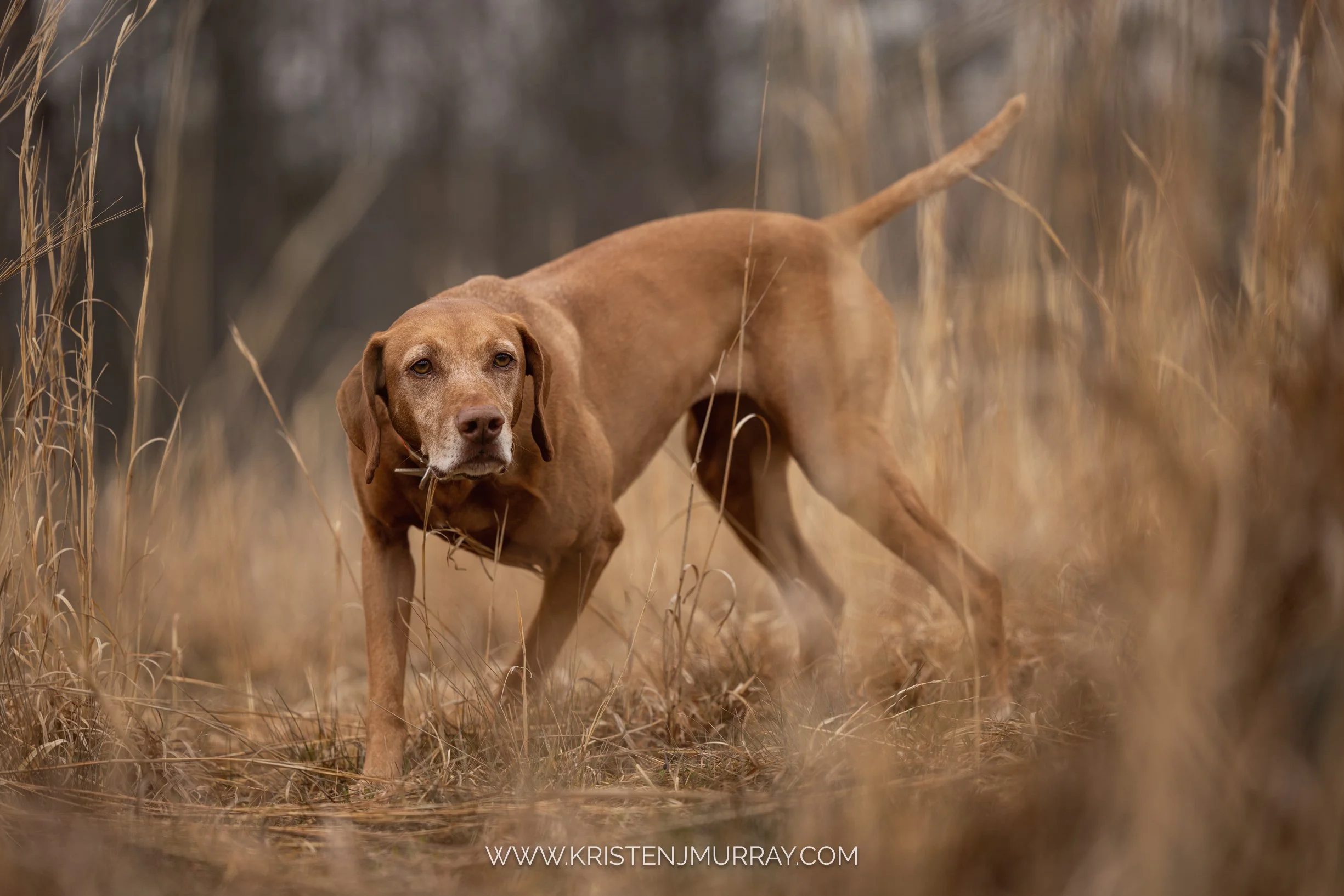
Zara, the Accidental Bird Dog, on point in North Carolina quail hunt
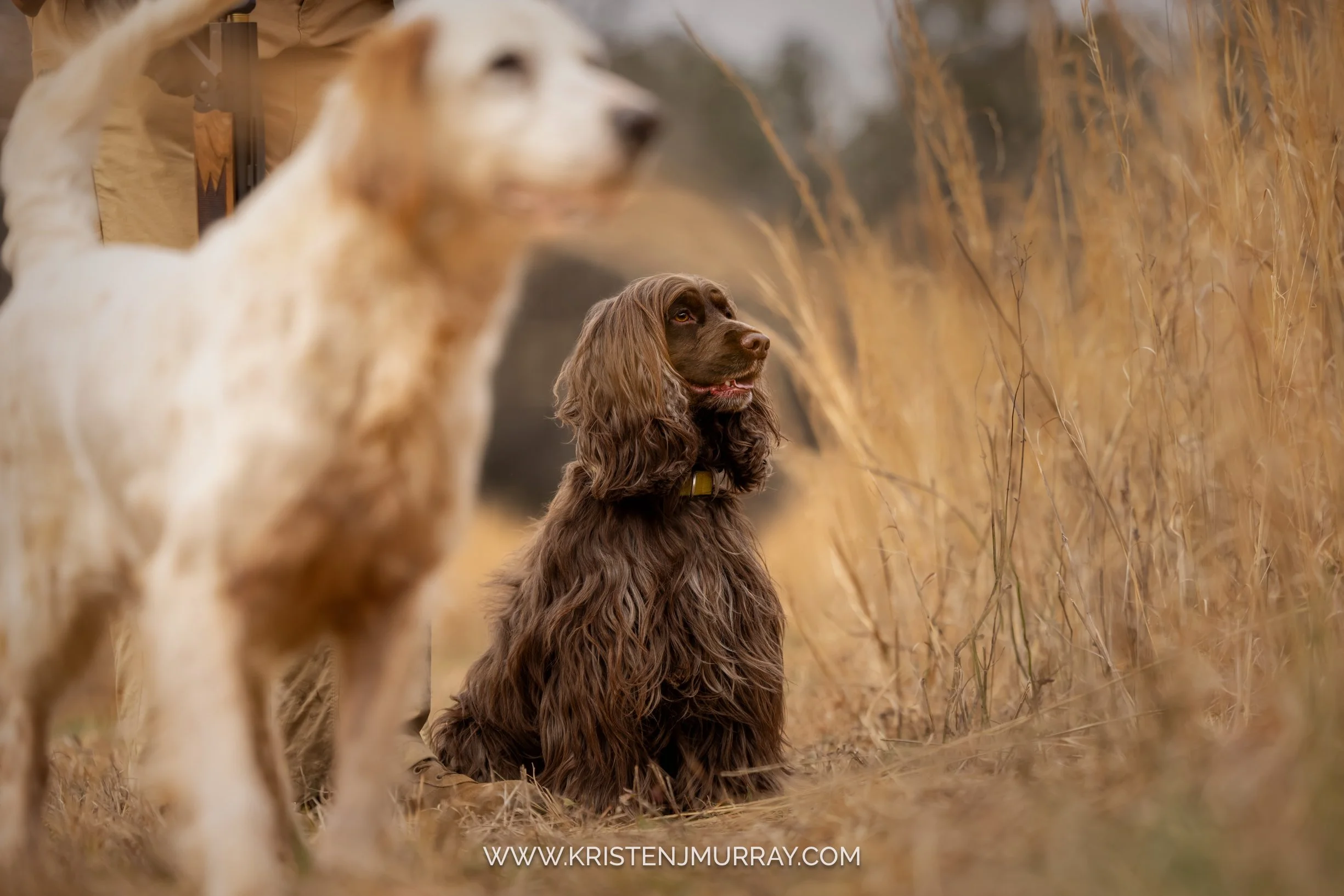
Louie, the English Cocker Spaniel waiting to be released to flush the quail. Atlanta, Georgia
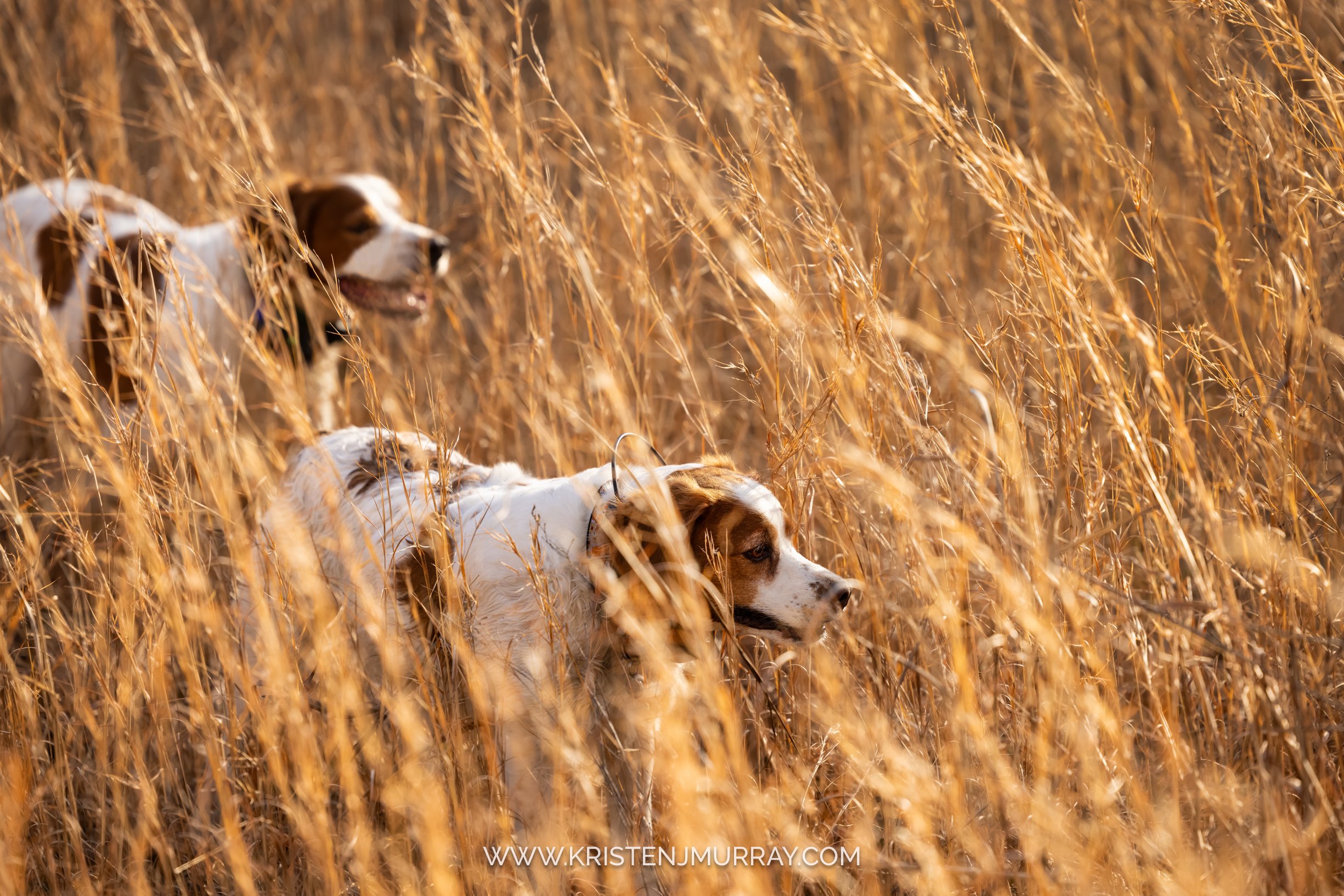
French Brittanys pointing and backing. Quail hunting in Atlanta, Georgia
2. Shoot the Story, Not Just the Bird
The hunt isn’t only about the point and the flush. . . it’s the long walk in, the quiet focus, the camaraderie. Capture those in-between moments: a handler’s hand brushing through feathers, the glint of orange in early light, the dog’s chest heaving after a retrieve.
Bird dog photography is about connection, between hunter and dog, effort and reward, tradition and time, man and nature. The more of that story you tell, the more your images will feel alive.

Islay getting some mid-hunt snuggles from her Dad during a grouse hunt with Maine Upland Guide Service, Jackman, ME
3. Use the Light You’ve Got
Golden hour gets all the glory, but you can find magic in all kinds of light. Overcast days pull out texture in feathers and fur; harsh midday sun bouncing off wheat or broom sedge can turn a field into gold.
Work with what the day gives you. Adjust your angles, find backlight when you can, and protect your highlights (especially on blaze orange and white fur).
If you’re shooting in low light (like those misty, fog-rolled mornings) bump your ISO and lean into the mood. Sometimes the grit is what makes it real.
4. Get Low, Get Dirty, Get Real
If you want to capture the intensity of a bird dog in motion, you have to meet them at their level. Drop to your knees, lie in the grass, crawl if you have to.
Low angles create depth, drama, and intimacy. They make the viewer feel like they’re in the field with you.
Don’t worry about keeping your pants clean or lying on green briar. . . worry about getting the shot that shows the dog’s eyes locked on scent or their muscles tensed mid-stride. The uplands aren’t tidy, that’s the beauty of it.
5. Respect the Hunt
This one matters most.
Never disrupt the dogs, never step in front of a gun, and never put the shot before the safety of all. A good upland photographer understands the rhythm of the field and moves quietly within it.
Let the moment unfold. Don’t over-pose, don’t yell commands, and don’t chase the dogs. The best images come from patience; from knowing when to click and when to simply watch.
Because the truth is, the best bird dog photos are earned, not staged.
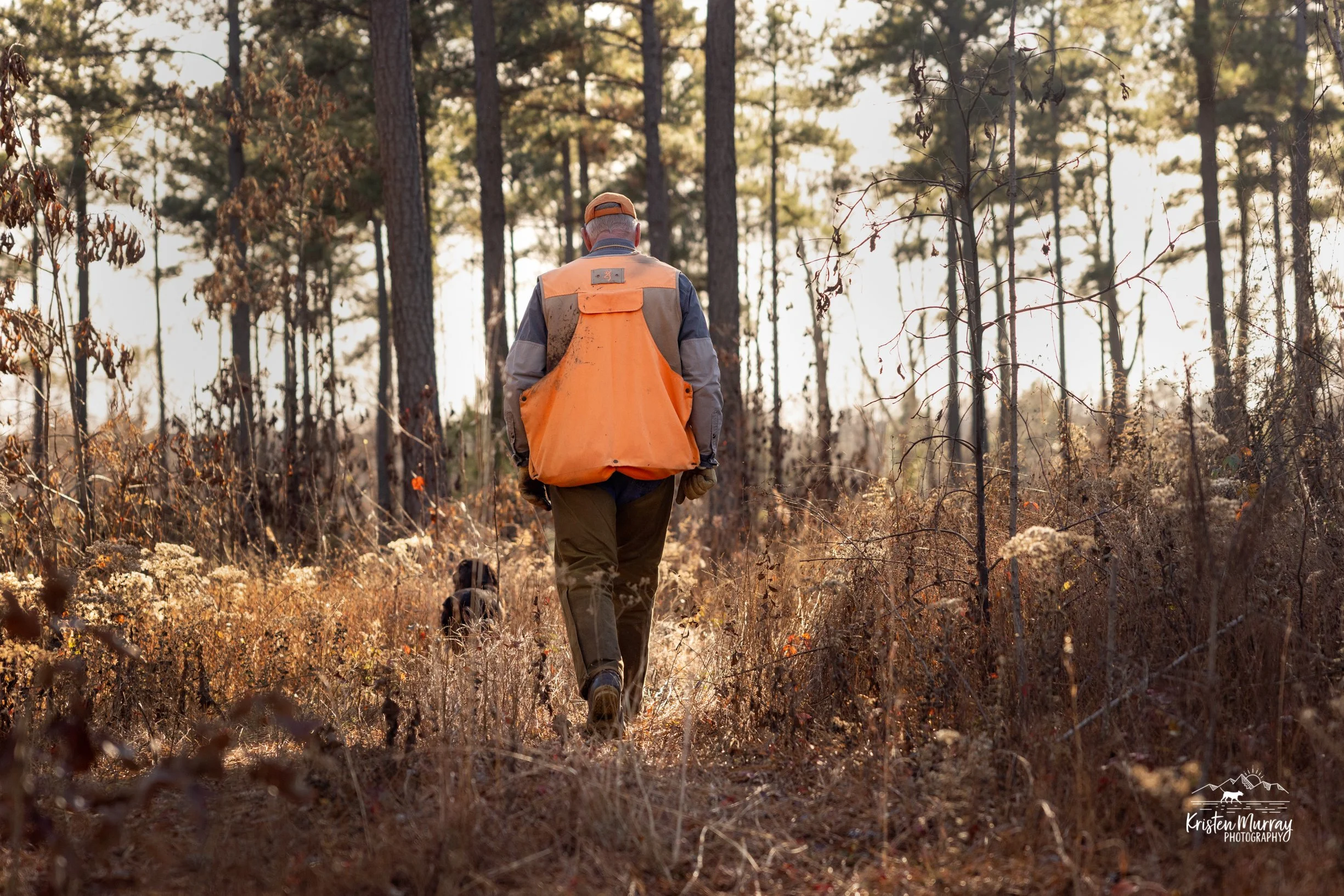
Guide walking into the pines at The Preserve at Dundee, Hanover, Virginia
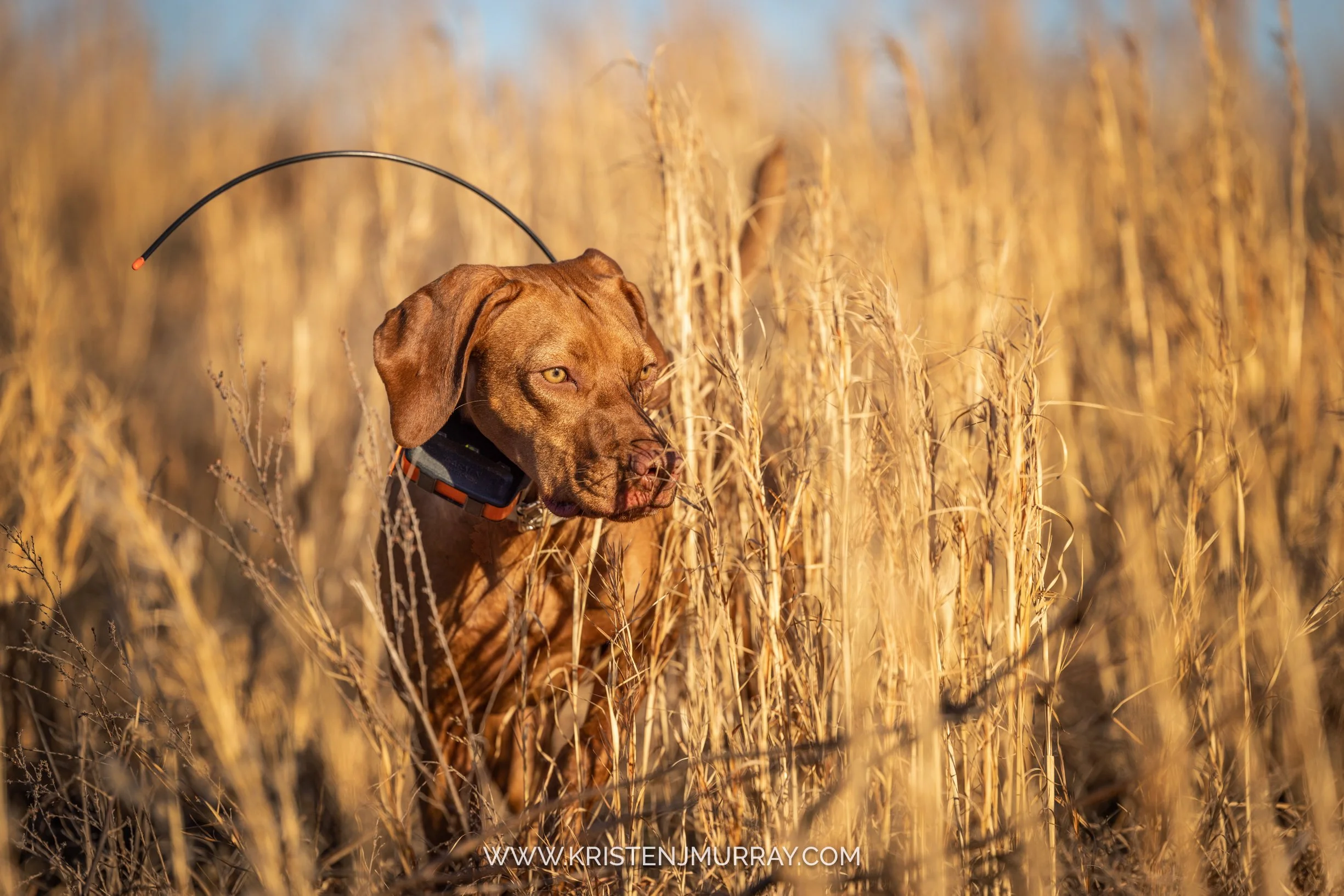
Vizsla on point at Little George Rod & Gun, Buckingham, Virginia
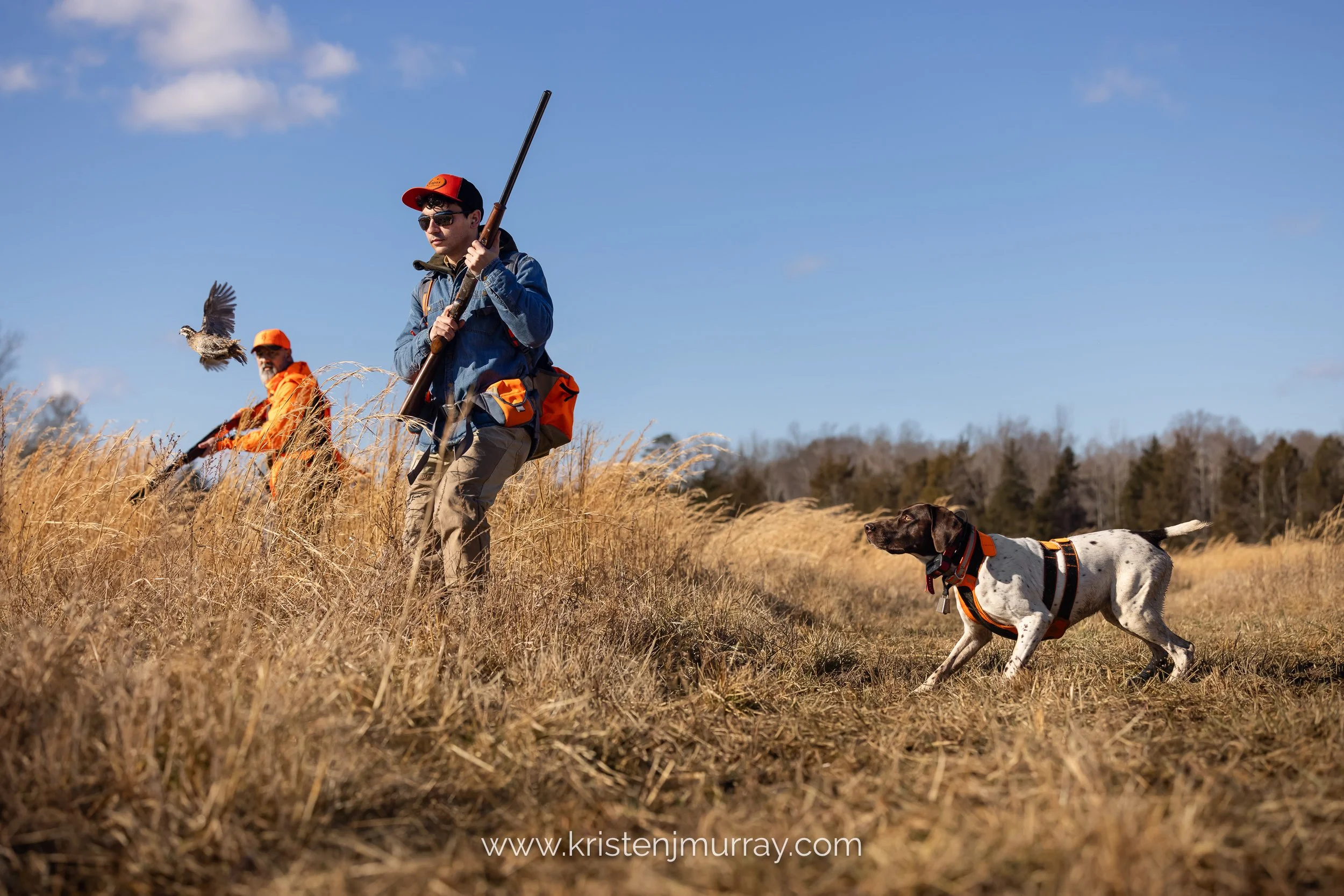
Nutmeg excited for the flush. Quail hunting at Orapax Hunting Preserve, Goochland, Virginia
Every Hunt Tells a Story
Every upland hunt is different; a new cover, a new dog, a new chapter in a story we’ll tell long after the season ends. When you photograph bird dogs in the field, you’re not just capturing what happened. You’re honoring why it matters.
If you want your hunt photographed this season, let’s chat. Get in touch here.