
Natural Flea and Tick Prevention for Dogs: What I’m Using This Spring Instead of Chemicals
After pulling 84 ticks off Cedar in one day, here’s why I’m going trying out an all-natural approach this season.
Yes, you read that right. . . Eight. Four. Eighty-four freaking ticks. It all started with a 3-mile hike in the woods.
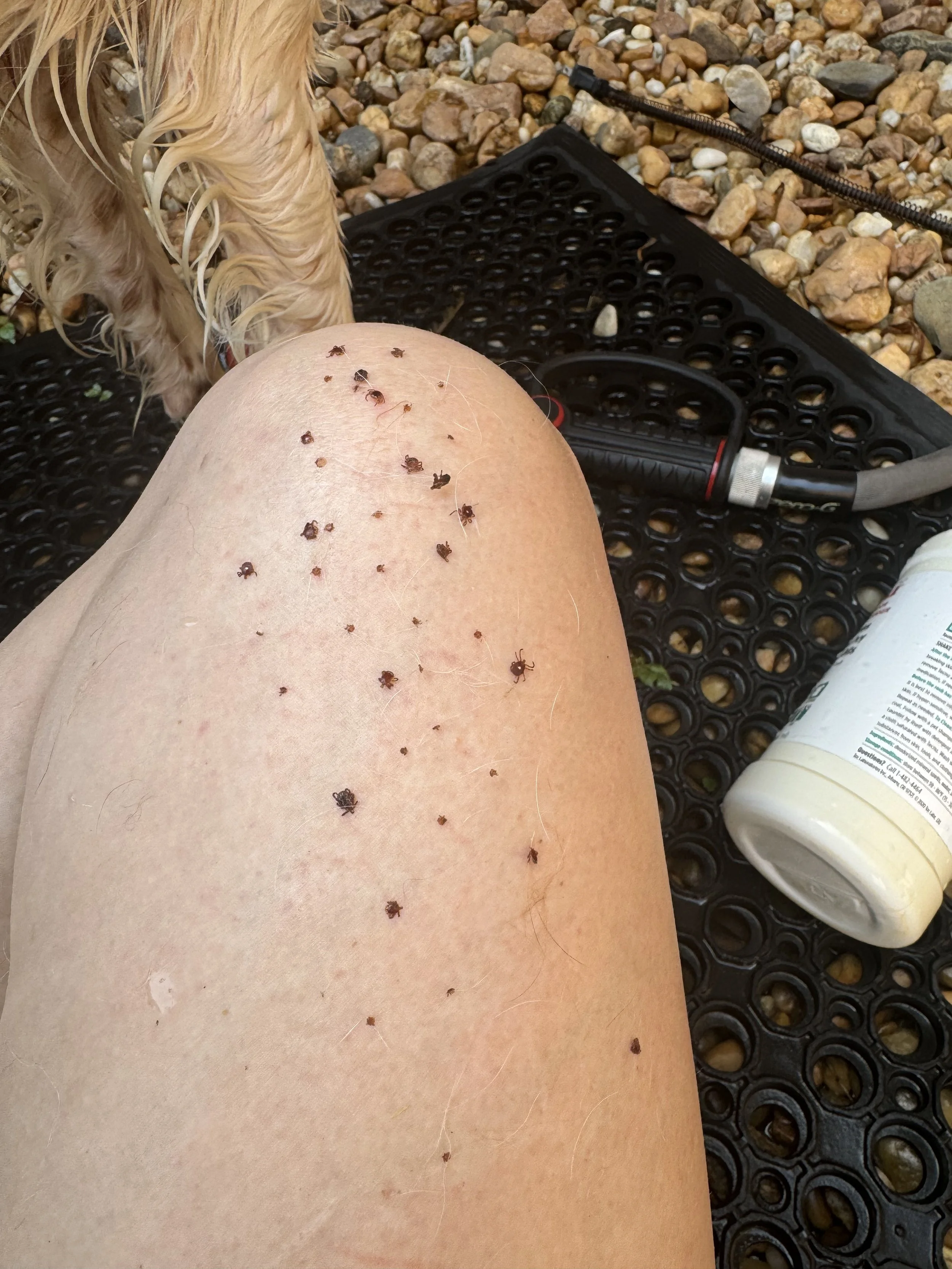
This was just what came off her front legs.
It was a perfect summer afternoon—sun filtering through the trees, Cedar flying down the trail, both of us in our happy place.
But when we got home and got her bathed, oh man the straight horror!
I’ve never seen that many ticks at once. Some were crawling. Most had already latched on. And while thankfully they were dead (thanks to the flea & tick med she was on at the time), the sheer volume of them? Still gives me nightmares.
It was the moment I realized I needed to rethink how I was handling flea and tick season.
Because the idea of continuing to load her up with chemicals every month—especially when I didn’t feel 100% sure about the long-term effects—just didn’t sit right anymore.
This year, we’re taking a more natural approach.
Why I’m Saying “Maybe Not” to Traditional Flea & Tick Meds
First up - this isn’t a preachy post. I’ve used oral and topical preventatives in the past (and still do for some of our other pets.) And I get it—ticks are gross, and flea infestations can be a nightmare.
But the more I read (or maybe the more I questioned what I was reading), the more I started wondering:
What’s the long-term effect of these chemicals in Cedar’s system?
Why do some products come with neurological side effect warnings?
What’s Dr. Karen Becker (The Forever Dog) got to say about it?
Could there be a safer, gentler way that still works?
I’m not here to make your decision for you—every dog and every lifestyle is different. But I am here to share the natural options we’re using this spring in case you’re curious about switching things up too.
And as an obvious disclaimer: I’m not a vet, this is just what we are doing for Cedar. Be sure to talk with your veterinarian (or find a holistic vet) before changing up your process.



Natural Flea & Tick Prevention for Dogs: What I’m Using Instead
🧄 Fresh Garlic (Yes, it’s safe—in the right amount)
When given properly, fresh garlic is a tried-and-true natural tick and flea repellent. It doesn't kill pests, but it makes your dog less appealing to them. Garlic is metabolized and secreted through the skin, creating an odor fleas and ticks hate (but we can’t smell).
Daily Dosage (mixed into food):
5–10 lbs: 1/6 tsp (or ~½ clove)
10–15 lbs: ¼ tsp
20–40 lbs: ½ tsp
45–70 lbs: ¾ tsp
75+ lbs: 1 tsp
💡 Pro tip: Crush it and let it sit for 10 minutes to activate the good stuff (allicin), then mix with food.
🛑 Avoid for puppies, pregnant dogs, or dogs with anemia. Again, always check with your vet if you’re unsure.
🌿 Wondercide (Both the spray and the shampoo)
Yall, I love this stuff! The peppermint one smells (and seems to work) the best. Wondercide is all natural and they even have an outdoor spray you can use on your yard.
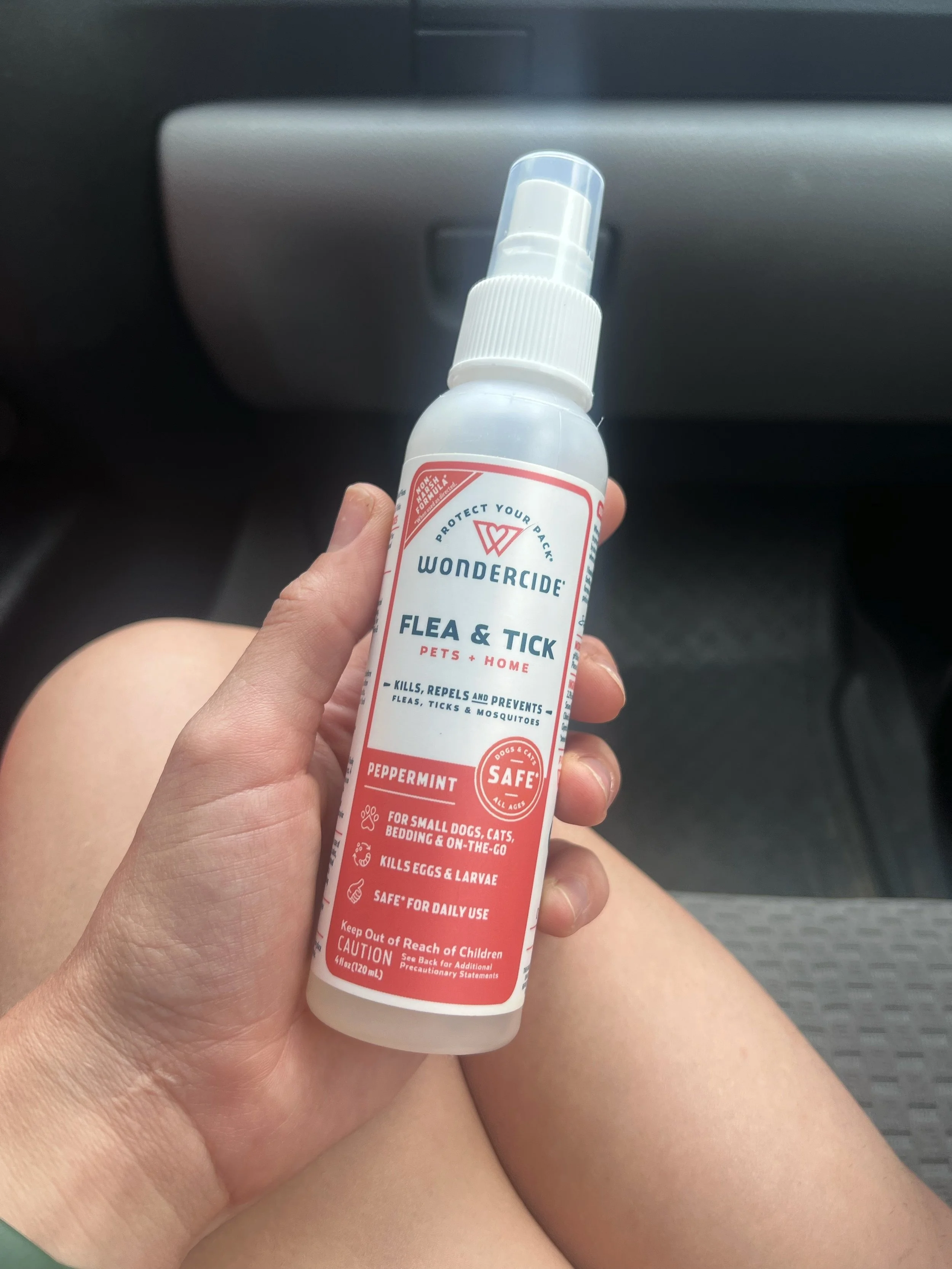
And, if you want to DIY your own spray, here are some options:
🍎 Apple Cider Vinegar Spray
Apple cider vinegar helps balance pH and makes your dog less attractive to ticks and fleas. It also gives their coat a nice shine.
DIY Recipe:
1 part raw apple cider vinegar
1 part water
Optional: a few drops of dog-safe essential oils (like lavender or cedarwood)
Put it in a spray bottle and mist lightly before hikes or trail time.
🌱 Essential Oil Repellent (Diluted!)
Some essential oils can help repel pests naturally. Just make sure you never apply them directly without a carrier oil.
Safe oils for dogs:
Cedarwood
Lavender
Geranium
Lemongrass
DIY Mix:
2–3 drops essential oil
1 tablespoon carrier oil (like coconut or olive)
Apply a few drops behind the shoulders or on a bandana before outdoor time.
So… Do Natural Preventatives Work?
They can—especially when used consistently and combined (like garlic + Wondercide spray.) The truth is, no method (natural or chemical) is 100% foolproof. But for us, the goal is to reduce the risk in a way that feels safe, aligned with how we live, and manageable.
I’d rather deal with an occasional crawling tick than give something that might harm her long-term. That’s just me.
Final Thoughts
This isn’t about doing things perfectly—it’s about doing what feels right for you and your dog.
I’ll still be keeping an eye on Cedar this season, just like every year. But I feel better knowing I’m supporting her health in a way that aligns with our values: wild, free, and as natural as possible.
If you’re thinking about ditching the chemicals this year too, I hope this helped.
Got questions? Or a favorite natural method I didn’t mention? Shoot me a message—I love swapping outdoorsy dog mom hacks.
PS: Also, if later this summer I find the natural-route isn’t quite working (don’t think that’ll be the case but if so). . . I’ll come back to update this.