
Hypoglycemia in Dogs: How to Recognize, Treat, and Prevent Low Blood Sugar in Active Dogs
This is a story of Cedar’s first close call and what I learned about hypoglycemia the hard way.
You don’t know what you don’t know and I used to think the only real danger on summer hikes was heat stroke. (Besides snakes, poison ivy, that kinda stuff, of course.) That was before I learned what low blood sugar looks like. . . in the middle of the woods, with no cell service, and a young, excitable Brittany pup named Cedar. (aka, the now love of my life, shhh, don’t tell Daniel.)
First off, what is hypoglycemia in dogs?
Hypoglycemia happens when your dog’s blood sugar drops too low, leaving them without the energy they need to keep going.
While it’s often talked about in puppies, hunting dogs (and other extremely active pups) are at risk too, especially during high-energy activities like upland or waterfowl hunting, field trials, or training days.
Story time:
We were out on a hike in Jefferson National Forest. It wasn’t a long one, and there were plenty of creek crossings to keep her cool.
Cedar was on and off leash, close by, doing what she does best—exploring with joy with her brother Deeks. She had water, plenty of shade, and honestly, I thought we were good.
That was, until she stopped to vomit towards the end of the trail.
”Hmm, that’s odd.” I thought. But then didn’t think much more about it once I saw her prance her happy little self off down the trail to her brother.
In hindsight, that was our ‘something’s wrong’ red flag I completely ignored.
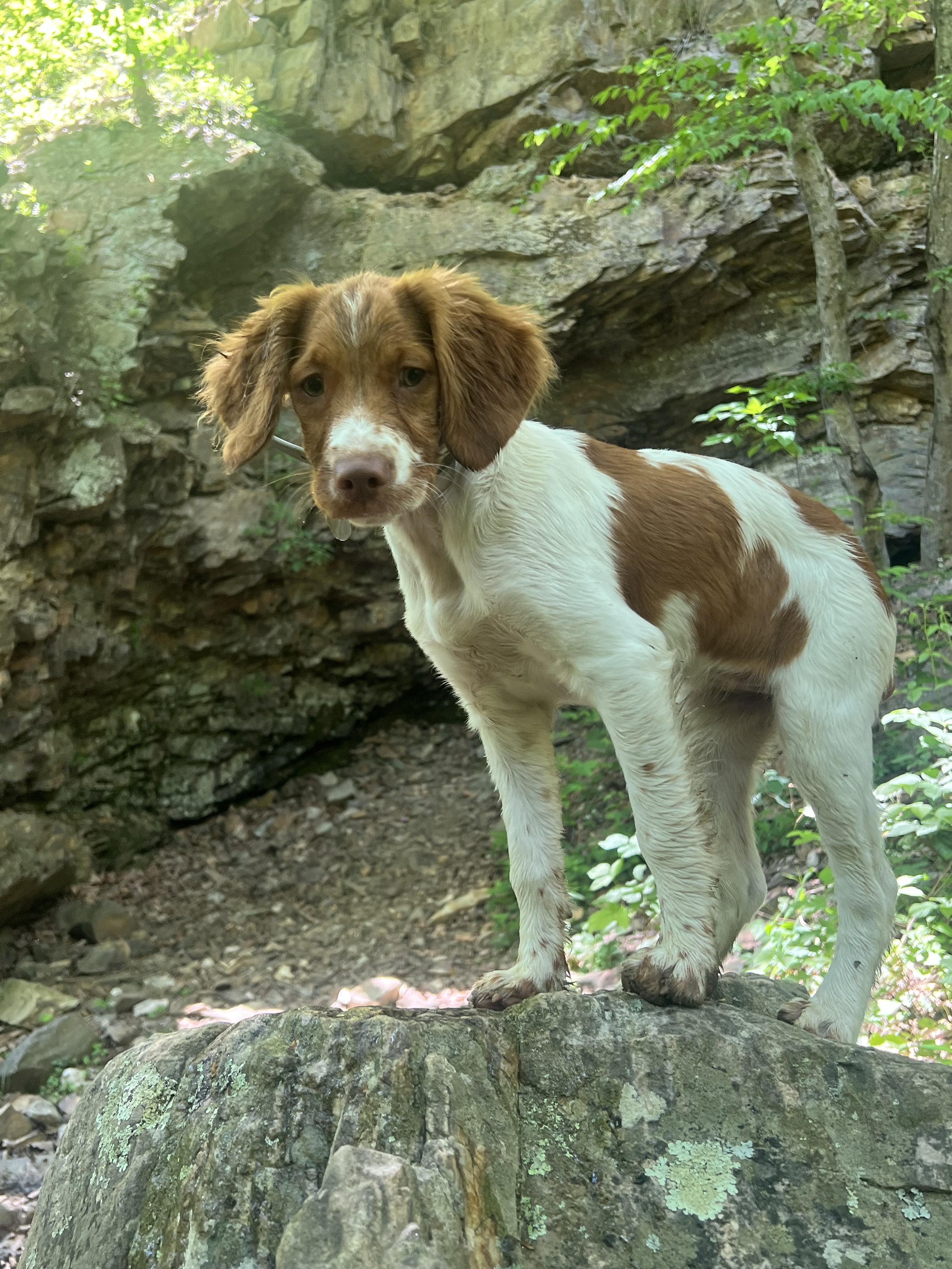
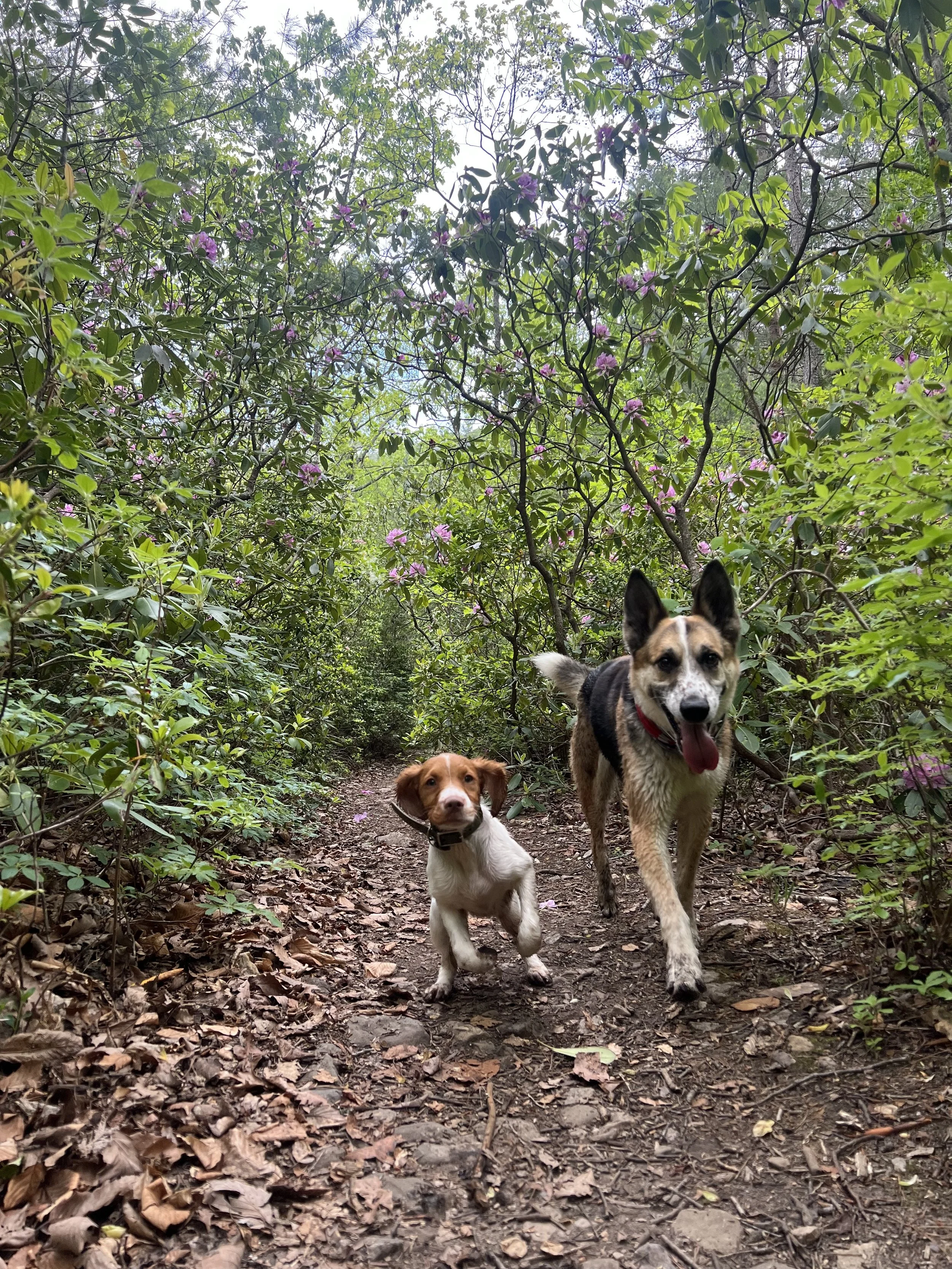
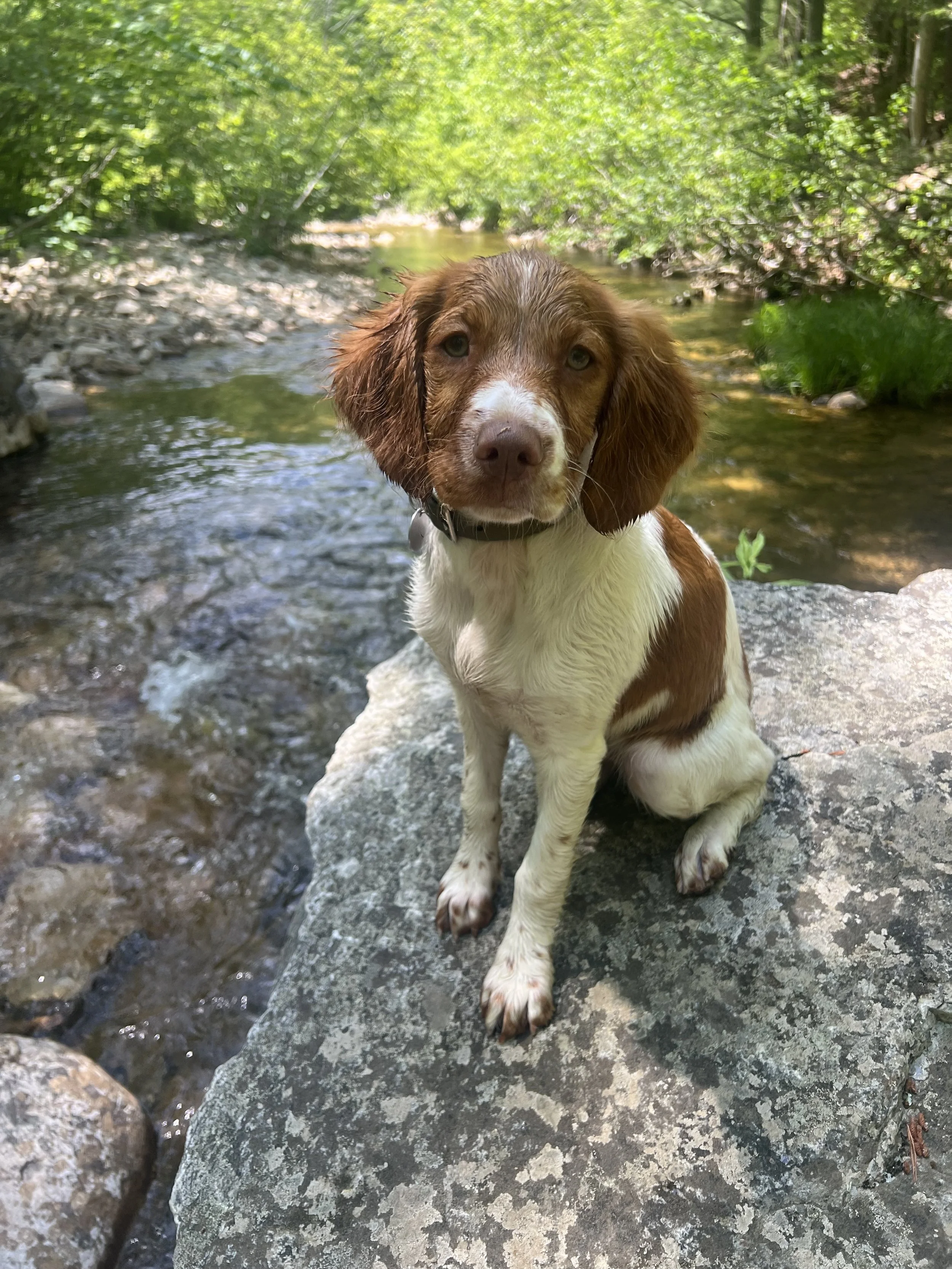
Ten minutes later, when we stopped to give her more water, I knew something was wrong. She was wobbly. Disoriented. Her head was bobbing all over the place, and her eyes had this vacant, glassy look. She couldn’t even stand on 4 feet, she kept sitting or lying down.
Honestly, this next part is where I feel like the worst dog mom ever. But, again, you don’t know what you don’t know, and I didn’t realize in that moment what a big deal this was.
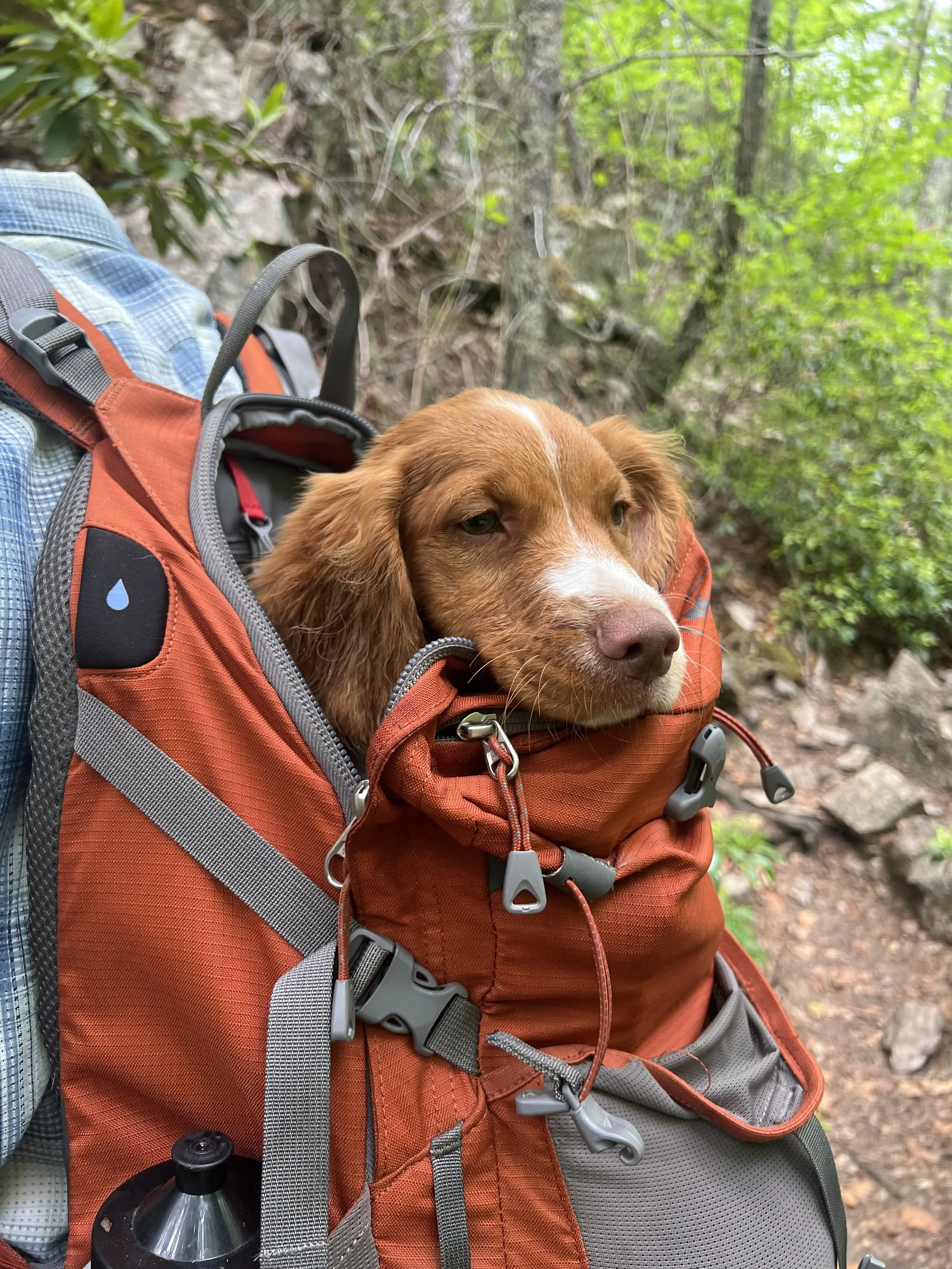
We scooped her into Daniel’s backpack and finished the short stretch to the waterfall (1/10th of a mile) — again, don’t come for me, at the time, I didn’t realize how serious it was. I thought she was “just tired.” But the moment we arrived, I looked at her in his pack and knew we needed to go back. Now.
I can’t put my finger on it, other than she just looked different than she had 5 minutes before, and I had this eerie ‘mom’s intuition’ feeling.
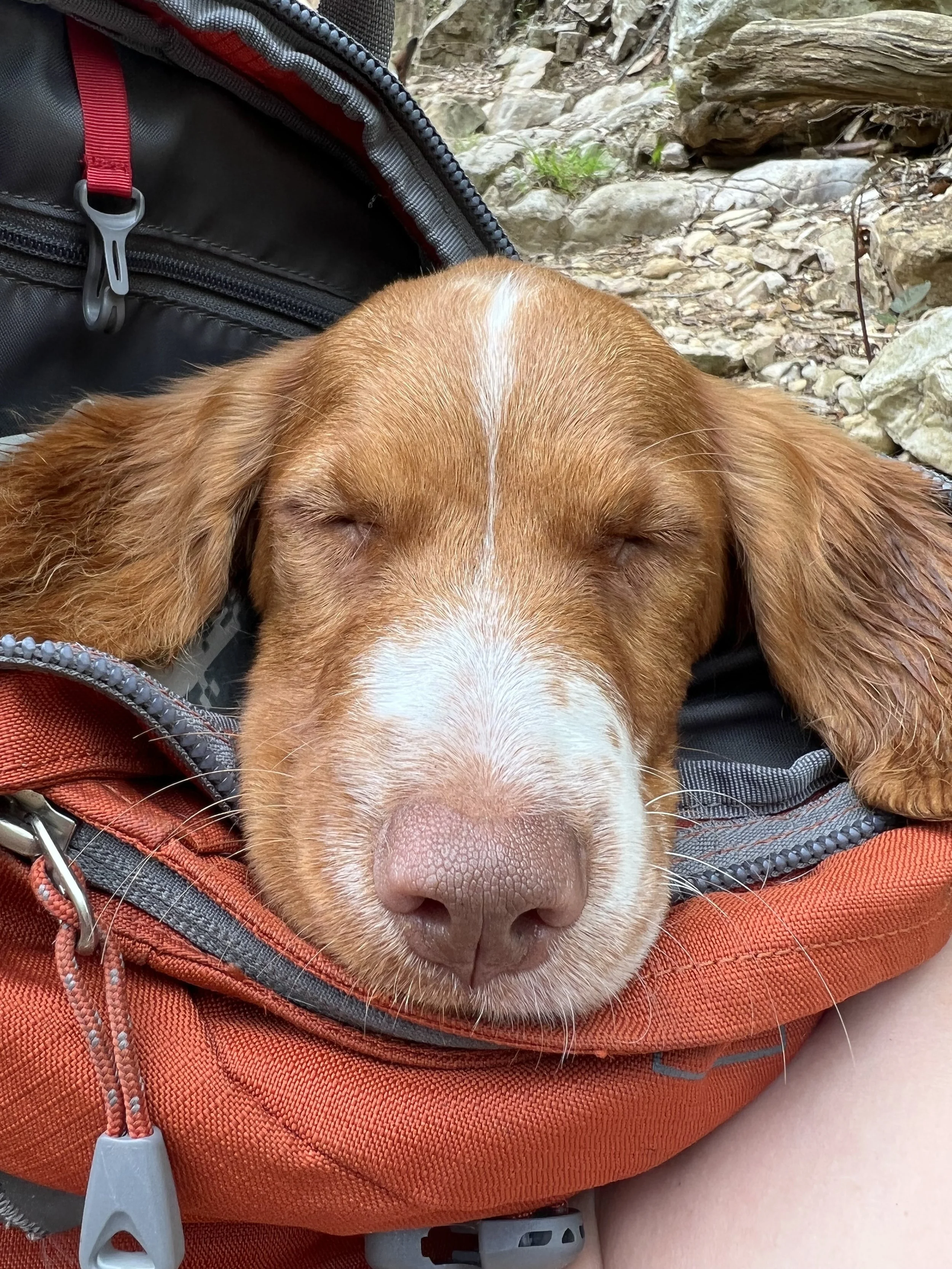
I’m not a runner, like I don’t do cardio. . . I don’t know how we made it back to the car so fast, but she slept the entire hike out, nestled in the pack, with me checking on her every 15 steps.
When we got back to the van, she still couldn’t walk properly—her legs shaky, her stance unsure. Mind you, we had no cell service. I couldn’t call the vet, I couldn’t google symptoms, I was starting to panic.
Then it hit me, she had breakfast that morning, but you know, I get hungry on hikes. . . maybe she did too.
Maybe her blood sugar crashed.
I remembered I had honey packets stashed in the van. I rubbed one on her gums. Within minutes, she started to perk up.
A few licks later, she finished the packet, drank some water, and started coming back to herself. After a meal and some rest, she was right back to normal.
Once we got to cell service, I called the vet and made an appointment for blood work. It came back normal, which only helped confirm what I suspected — hypoglycemia.
This was Cedar once we got her back to the van.
Signs of Hypoglycemia in Hunting Dogs
Early detection is key. Watch for these common signs:
Sudden drop in energy or enthusiasm
Wobbliness or loss of coordination
glassy eyes
vommiting
nervousness/anxiety
Shaking or trembling
Disorientation or confusion
Staring off or seeming “out of it”
Seizures or collapse in severe cases
Some pup parents mistake these signs for overheating or fatigue, but recognizing hypoglycemia early can save your dog’s life.
How to treat hypoglycemia in the field
If you notice these symptoms:
Stop whatever activity immediately.
Offer a quick simple sugar source.
Juice, honey, or a 50% dextrose solution, or glucose gel rubbed on their gums works quickly.
If you don’t have these, a small piece of bread or high-sugar snack can help temporarily.
if actively seizing, don’t force them to try to swallow. Dogs can absorb simple sugars through their tongue and gums. Rub honey on their gums and be careful not to get bit.
Important info: artificial sweeteners will not work and can even make it worse, it has to be the real sugar
Let your dog rest and take it easy for the remainder of the day.
Follow up with a balanced snack or meal to stabilize their blood sugar long-term.
If your dog doesn’t improve quickly or shows severe symptoms, seek veterinary care immediately.
How to prevent hypoglycemia in the first place
Prevention is the best treatment. Here’s how to help your dog avoid low blood sugar in the first place:
Feed a quality meal before working, giving enough time to digest (about 2 hours before exercise).
Cedar usually gets fed once a day but if we’re doing any high intensity activity, she gets about 25% of her meal in the morning
Offer small snacks or energy gels between hunts or during long training days.
Keep quick sugar sources on hand, like honey packets.
Know your dog’s limits, some burn through fuel reserves faster than others.
Are they conditioned, or is this too much work too soon? (Early season hunting trip after a spring & summer of chilling on the couch, for example.)
Is your dog super lean with a high drive? Or maybe a young and hyper puppy? That’s a dog that could be at risk.
Monitor them closely for early warning signs, especially in cold or high-energy environments.
Since that day, I never head into the woods or the field without my honey packs. During Cedar’s first hunting season, I would even stop every couple of hours, offering her a snack or a little squeeze of sugar. It became part of our routine. Now that she’s older, she’s learned how to pace herself, and we haven’t ran into any more blood sugar issues.
I still carry that honey packet and a snack bar though. . . . Just in case.